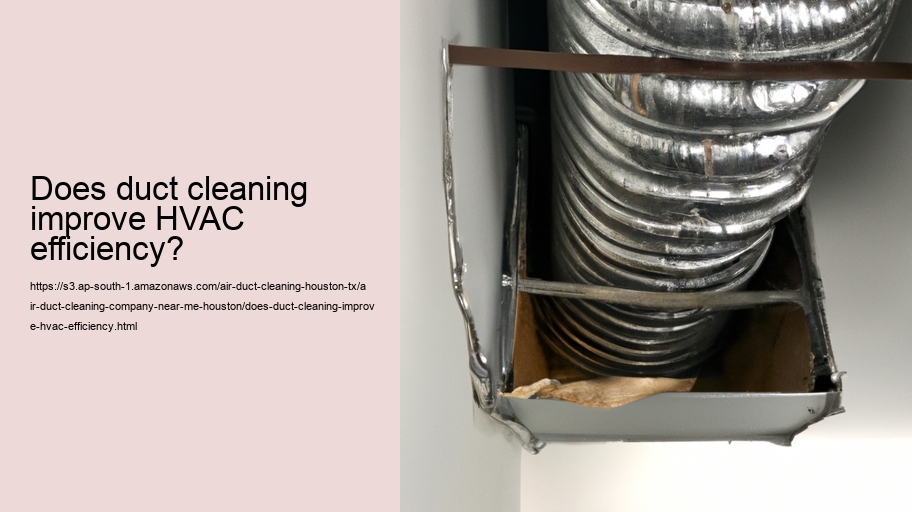
The question of whether duct cleaning improves HVAC efficiency is one that has captured the attention of homeowners and industry professionals alike. How much does air duct cleaning cost in Houston? . To answer this question, its essential to delve into what duct cleaning entails, the circumstances under which it is beneficial, and the potential impacts it has on the performance and efficiency of heating, ventilation, and air conditioning (HVAC) systems.
Duct cleaning, in its most basic form, refers to the removal of dust, debris, and other contaminants from the ductwork of an HVAC system. This process is typically carried out by professionals who use specialized tools and equipment to clean various components of the system, including the supply and return air ducts, registers, grilles, diffusers, heat exchangers, cooling coils, condensate drain pans, fan motor, and fan housing.
The rationale behind duct cleaning is that it can lead to a cleaner indoor environment by reducing the presence of pollutants that are commonly circulated through the air ducts. However, when it comes to its impact on HVAC efficiency, the conversation becomes more nuanced.
HVAC efficiency is determined by how effectively the system can maintain the desired temperature within a space, while using the least amount of energy. Efficiency can be impacted by a variety of factors, including the condition of the ductwork. If ducts are clogged with a significant accumulation of dust and debris, the airflow can be restricted, forcing the system to work harder to distribute air. This additional strain can lead to increased energy consumption and reduced efficiency.
In cases where there is substantial blockage or contamination, such as mold growth, insect or rodent infestation, or a buildup of dust and debris due to neglect, duct cleaning can help restore proper airflow and improve the HVAC system's performance. By removing these blockages, the system can operate more smoothly, which can potentially lead to energy savings and a prolongation of the systems lifespan.
However, its important to note that the typical accumulation of dust in a homes ductwork does not necessarily significantly decrease the efficiency of the HVAC system. The U.S. Environmental Protection Agency (EPA) states that there is no evidence that a light amount of household dust or other particulate matter in air ducts poses any risk to your health or significantly decreases system efficiency.
Moreover, duct cleaning is not a one-size-fits-all solution. It is most beneficial in specific situations and should not be considered a routine maintenance task. For instance, after a home renovation project that generates a lot of dust, duct cleaning may be advisable to prevent the newly accumulated debris from circulating throughout the home.
The best approach to maintaining HVAC efficiency is a combination of regular maintenance, such as changing filters, cleaning coils, and ensuring that the system is in good repair. These routine practices are more directly correlated with maintaining an efficient HVAC system than duct cleaning alone.
In conclusion, while duct cleaning can improve HVAC efficiency under certain circumstances, it is not a guaranteed solution for efficiency issues. It can be beneficial when there is visible contamination, blockage, or specific health concerns. However, regular maintenance and care of the HVAC system are paramount to ensuring efficiency over the long term. Homeowners should consult with HVAC professionals to determine the best course of action for their specific situation, rather than relying on duct cleaning as a catch-all solution for HVAC efficiency concerns.